Showing posts with label games. Show all posts

08 January 2015

Postcards from the blocky desert

I did say I'd work on some things during the break, but Mon finally got me and Mikko into Minecraft, and we were instantly hooked. We spent a lot of time playing together in a LAN world that Mon set up for us. It was like the LEGO and make-believe games we would play as kids.

I also discovered that Mon has some pretty cool natural architectural ability. He showed me his private Minecraft world, and the design of his various houses and the sculptures he made out of whole mountains just blew my mind. The monkey skull with lava falls coming out between its teeth was my personal favorite. I wish I'd taken screenshots.

He was also very sweet, giving me gifts that he thought I'd find useful in the LAN world: a nearly unbreakable sword, a kevlar vest, a book and quill for noting coordinates, a horse and saddle. When I asked him why, he said it was because I kept dying, which I took to mean that he cared.

He left for school just a few days before I did, and playing was a lot lonelier without his and Mikko's constant joking and trash talk. Here in my grandmother's house in Makati, before my flight to Singapore tomorrow, it's even lonelier without them both. I actually find myself wishing for their pranks, like the time they filled my house with cows. I had to wreck a wall just to push them outdoors, and since I lived in a dense forest, there were cows in the trees for days. I've set up my own private world to explore and build in, and I've built three houses already, but it's almost no fun without my brothers' offers of housewarming gifts (i.e. lava).

I found myself in the desert the other day and thought I'd try going for scale. Maybe a huge arch. I liked the idea of an arch in the middle of the desert, the sign of travel and civilization in the middle of nowhere, now witnessed only by skeleton archers, zombies, and the occasional witch. Designing and building it was both soothing and challenging. Afterward, I flew and walked around it, doing nothing except watching the shadows change as the sun and moon rose and set.

I don't know how he knew, but Mikko seemed to know what I had in mind even before I left home. "What are you going to do now that Mon's gone? Probably build your temples and stuff," he'd said.

I wish he and Mon had been there, even just to laugh at how sad it was, building an arch in the desert — a monument to builders who were no longer there.


(For scale, a player-character is two to three blocks tall.)

21 January 2014

Jane at the University

Cris and I spent Saturday night playing board games with his friends. One game I really enjoyed was Betrayal at House on the Hill, which — along with the book I'm currently reading on American First Ladies — probably gets most of the credit for this dream I had the other night.

--
It was the 1800s. Jane Pierce (not the actual Jane Pierce) was a young woman who had come to the University to study chemistry, or something like that.

The University had a charred, half-collapsed old faculty and laboratory building that people said was haunted and/or cursed. Many years before, the University president at the time, Gunther Godfrey, had gone mad, claiming that he had been attacked by a mutant crocodile, and fled the campus, never to be seen or heard from again. Two days after Mr. Godfrey's disappearance, the Croc attacked another beloved teacher, Sarah Pullman (possibly Polk, but not the actual Sarah Polk), as well as two other faculty members in the lab. A portion of the lab was burned, and the bodies of Ms. Pullman and the other two faculty members were never found.

At the time of Jane's arrival at the University, campus legend had it that the lab was haunted by the spirits of the lost faculty members, unable to rest because their bodies had never been buried, and the Croc was still loose. Jane was fascinated by the building and, as an orphan, sometimes fantasized that the two other faculty members (never named in the dream) had been her parents. It's strange that no one at the University had been able to confirm this for her, but by the time of Jane's senior year, these mysteries remained unsolved.

Sometimes, Jane imagined that she had seen the Croc in the tall grass.

One day, an animal trainer came to the University to give some sort of demonstration, and afterward, she let the students play with the animals for a while. Jane played with some of the dogs and chased a long-haired, grumpy-looking orange cat toward the trophy case. While trying to get the cat to come out of the odd hole it had wedged itself into, Jane discovered a secret passage to some underground offices.

The first office looked like someone had left it in a hurry; things had been knocked over, and papers were strewn about. Jane discovered that the office had belonged to Gunther Godfrey. Among the papers, Jane found that someone had been threatening Mr. Godfrey. He had found out something about the Croc's origins, and this someone had threatened to sic the Croc on him if he didn't leave. There were claw marks on the walls and on the desk.

I guess Jane left because she heard a noise, but she went back to explore the underground offices the next day. This time, she found a person, the long-missing Sarah Pullman.

Fiercely bitter, Ms. Pullman confessed to Jane that she had created the Croc. She had been more popular than Mr. Godfrey and so had wanted the University presidency for herself. But after Mr. Godfrey's disappearance, the Croc had turned on her in the lab. In the middle of the struggle, the fire started, the other faculty members were lost, and one of them became the vengeful spirit that indeed haunted the old lab. The spirit had also cursed Ms. Pullman to live underground, unable to venture above for food without being able to feel as though acid was melting her flesh away.

Jane left her there and went to the old lab. Sensing her presence, the spirit was agitated and began collapsing the whole building, which also started to glow green and purple. The collapse extended to the underground offices, and, presumably, Sarah Pullman died there. It also pushed Jane into a narrow, tightly fenced yard behind the building, and at the dead end, she curled up into a ball and prepared to die as the building fell.

At the last second, however, Jane spotted a gap in the fence and a path in the tall grass, and she ran for it, not stopping as it took her away from the disaster.

It was morning by the time Jane found where the path ended: at a lonely wooden house, far out of the campus's sight. On the porch, in a rocking chair with a straw hat and a banjo, was a man with a crocodile's head. In that moment, Jane knew that this was her father.

The Croc had been one of the two unnamed faculty members and had been forced to become the Croc against his will. The vengeful spirit in the lab was the other one and Jane's mother, at rest now that Jane knew the truth. Her body was buried in a small plot beside the wooden house.

One year later, the Croc, Jane, and Jane's mustachioed gentleman were sitting around a table in the wooden house, watching with wonder and waiting for her eggs to hatch.

18 September 2013

Letter No. 26

I’ve been thinking a lot about how alone we all really are. It’s something I’ve believed for a long while, but the feeling of loneliness that usually comes with thoughts like, We really are alone, has been heightened in the past month or so.

My brother Mikko is now in Spain to study, and that makes me, once again, the only member of my immediate family living in Manila. Even though we went to the same college and lived in adjacent dorms for a year, I never really made an effort to see or talk to him. Today, I wish I had, but I guess I was too consumed with senior year, then the struggle of figuring myself out and the challenge of the first attempt at a grown-up relationship.

When I think back now to those years of tears, I wonder, Why didn’t I just head north then to see Mikko? If I missed my family so much, why didn’t I seek him, my own brother, out?

I guess I thought he wouldn’t understand. I was the older sibling; I was supposed to know what I was doing. So I was surprised to find, after he moved to Makati and we started meeting for church every Sunday, that he could actually be a good influence on me.

I put something like this in the letter I gave him shortly before he left: Being around him helped to ground me. I'd spent the past couple of years alone, making decisions about the kind of person I wanted to be. Mikko's presence allowed me to check those decisions and that person against my family's attitudes and expectations. He didn't ask me these questions; just hanging out with him, walking around, and chatting about his own post-college adventures led me to ask myself: Am I really okay with how different I'm becoming? Am I being good; am I a good person?

I only saw Mikko once a week, but the clarity I got from those Sundays was such a great addition to my life. I decided that I wanted to elicit with my life the kind of pride that I already felt for my younger brother.

(And when it comes down to it, having family around helped me deal with how I felt after that first grown-up attempt at a relationship crumbled like a soggy cookie.)

Now, I'm on my own again.

The thing now is, for all I've learned about my brother, and for all the time I've spent with Cris, I can't help thinking that you can't really know somebody 100%. There's always something about yourself that feels like something known by you and you alone — you are alone in your knowledge.

For all I know about his dreams and his quirks, I know that there's still stuff going on in Mikko's head that I will probably never see, just like there's stuff going on in my head that I wonder if anybody else can see. When I'm in the car with Cris and we are quiet, or when he's watching TV while I'm playing a computer game, I feel as though the hands of my brain are trying to reach into his skull and his chest to try and get a hold on some of the mysteries waiting in there.

When I peel away layers and layers of my own identity — childhood memories, sense of humor, favorite colors, love of pizza and sashimi, family ties, anxiety upon anxiety tied with a bow of anxiety, scars self-inflicted and not, my oldest friends, grammar, languages, left-handedness — and see what's left there, staring back at me, I wonder if anyone else can see that, especially if I can't describe it to them anymore. So it makes me wonder if I see other people the way they'd like to be seen — if I ever can or will.

And even if I must accept that I'll never see another person 100%, is there a certain percentage of them I should be able to see, to be able to say that I know them? Why is it that, for all the lunches, blankets, hopes, and fears I've shared, I still feel like I can't be seen 100%?

Or should it be enough that, despite how little or much they do see, the people I love make me feel that it's okay to be 100% myself? Is it better to be content to give and receive that kind of compassion than to keep picking at all the layers in the hopes of finding whatever's really underneath?

As an early birthday present to myself, I bought a copy of The Sims 3. I know the game came out years ago, but I haven't had the right computer for it until now — and it's not even my computer; Cris just lets me use his every now and then.

I find the game eerily realistic in that the Sims claim to have good relationships with one another yet spend nearly all their time on their own pursuits. The family founders had a whirlwind romance and then barely saw each other after they got married and had kids, yet whenever one entered the room, the other's mood would rise. The eldest child is grumpy, neurotic, dislikes children, and spends most of her time writing or jogging, but she seems to enjoy family dinners and isn't above changing a niece or nephew's diaper if necessary. The son-in-law knew his mother-in-law for only a Sim week or so, but he bawled like the rest of them when she passed away. Should I aspire to be more like the people I've made, happy to simply be with each other, even if they don't seem to actually know each other?

12 August 2013

thing-a-week 28, 29, 30, 31, 32: Excuses and My Lumpy Heart

I'm truly sorry that I haven't been able to keep up this series in the past month or so.

I could blame this on several things. It took me a couple of weeks, for instance, to find and then move my things into a new apartment. That was last month, though, and my things still aren't unpacked. I'm not actually living in the place yet because the bolts that hold my bed together got lost in the last move, so I'm still going through hardware stores and looking for right-sized replacements. And in the meantime, I'm still lodging with friends, making a longer commute, and being tired.

I wrote in June that I liked the extra time that my new work hours gave me, but these days, I spend more of that extra time just spacing out, emptying my head from the night before and recovering just enough for the one ahead.

And while I tell myself that I should be glad for the rest, I also know that making things helps me to rest, and I just haven't made enough time to make things.

For week 28, I made two flexagons with abstract designs. I actually worked on them at the office while waiting for each day's editorial meeting, cutting and folding and drawing a little each day.

Unfortunately, they just disappeared from my desk one morning or evening. Either I actually slipped them into a book or notebook to work on elsewhere and then simply lost them, or someone found them interesting and took them, like they took two of my modular hassocks.

As for week 29, sorry to subject you to more of my abysmal drawing skills, but all I have to show for that week is this drawing of a land hermit crab.


Sometimes, Cris and I listen to trivia podcast Good Job Brain in the car together, and one episode explained how land hermit crabs swap shells. We happened to be surrounded by SUVs then, so I started to imagine a not-so-distant future where land hermit crabs are hulking monsters. They use hollowed out cars as shells and trade up as they grow, from VW beetles to hummers and even buses and container vans. For entertainment, people go to arenas to watch the crabs fight for bigger shells.

For this drawing, I used a photo of a crab as a reference but was too lazy to put more work into the SUV. Perhaps once I have a story fleshed out, I can ask a more talented friend to illustrate.

Week 30 was the worst. I was supposed to complete my Processing project that week but ended up resigning the whole course. While I liked my project idea, the course itself no longer held my interest; its objectives were more and more clearly different from my own. So, I decided to just remember the sunk cost fallacy, quit the course, recover from my burnout, and save my project for another day.

All I have to offer for week 30, then, is a screenshot of some of the code I worked on while I was still working on it.


I don't know if you'd count the code, so I don't know if you'd count what I made in week 31, either.

I recently joined a Facebook group of fellow former Glitch players. I thought my stay wouldn't be long, but it turns out that there are many other people who also still feel sad that Glitch is gone, however silly it might seem to have so much feeling for a closed computer game. There's just nothing like it out there.

One day, a game developer invited the group to test a new game, Manyland. While the game wasn't going to be anything like Glitch, the developers had heard about the culture of Glitch players and were hoping we could bring some of that to the game.

So, week 31 saw me testing Manyland when I could. I can best describe it as a two-dimensional LEGO, though Minecraft players say it's like Minecraft. It is lots of fun but kind of lonely; perhaps due to lack of other players and a map, it gets existential fast — where am I? Why am I here? Where does this world end? If I build a platform far enough, will I go all the way around to where I began?

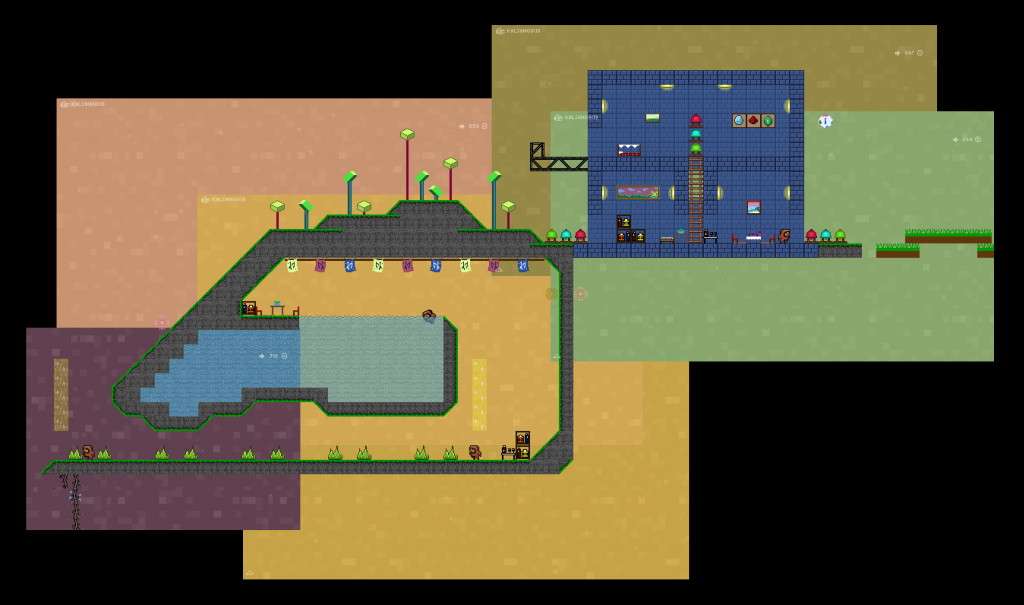
One of the first things I built was this simple brick box house with an underground swimming cavern and tiny wine cellar:


You can actually change the color of the sky, and the colors blend as you move across the screen, but when you take screenshots, you get just the color of the sky (and any translucent things, like water) based on your current position. The little gnome-like person in this assembled screenshots is actually me.

If you prefer something more traditional than code or digital building, then week 31 was also when I started work on the craft for week 32:


Week 32 was a nice return to paper. One of the secretaries at work used to spend her free time on complex, three-dimensional paper models of video game and cartoon characters. I wanted to try one of those but didn't want just any model. When I saw the Paper Torso by Horst Kiechle, it felt best for me.

I printed out the template of a human heart; the pieces took up about eight-and-a-half sheets of letter-size paper, and I did the cutting and folding in my spare time. I then glued all the pieces together in about three hours yesterday.

Photos of the resulting heart are below. It is pretty lumpy for several reasons: I cut next to some of the lines and not on them, and not all of my cuts were straight, so some of the triangles did not fit each other the way they were supposed to. I also used regular bond paper, which absorbed moisture from all the rain we've had lately and thus made the whole thing softer and easier to dent. While assembling the valves, I found I'd inverted a section and so had to push and pull it without tearing the whole thing apart.

But, it's mine, and I am happy to have made it, lumps and all.

Please excuse the awkward hand poses. I needed to keep a hold on the heart, but not too tightly, or I would have crushed it.


This project was lots of fun but also kind of weird. I knew what it was supposed to look like, and I knew that it was taking shape, but only when I had the whole thing in my hands did I think, This is a heart. I stood with it in front of a mirror just to see how big it was, and I somehow felt very small, cradling a white paper heart in my palms against my pink shirt.

I am thinking of doing lungs next, even if I don't even know what to do with the heart now.

The heart template is just one in a set of templates to build a neutered human torso. There are more templates on Mr. Kiechle's Paper Torso website; feel free to share with students, crafty doctors, and anybody else who might like the idea of making human organs out of paper.

Other stuff I feel like sharing: this waterfall cabin I built in Manyland, accessible only by falling into the water and swimming down (water is weird in Manyland) and exit-able only by magic wind. Unless you cheat and build ladders or platforms, any other way brings death.


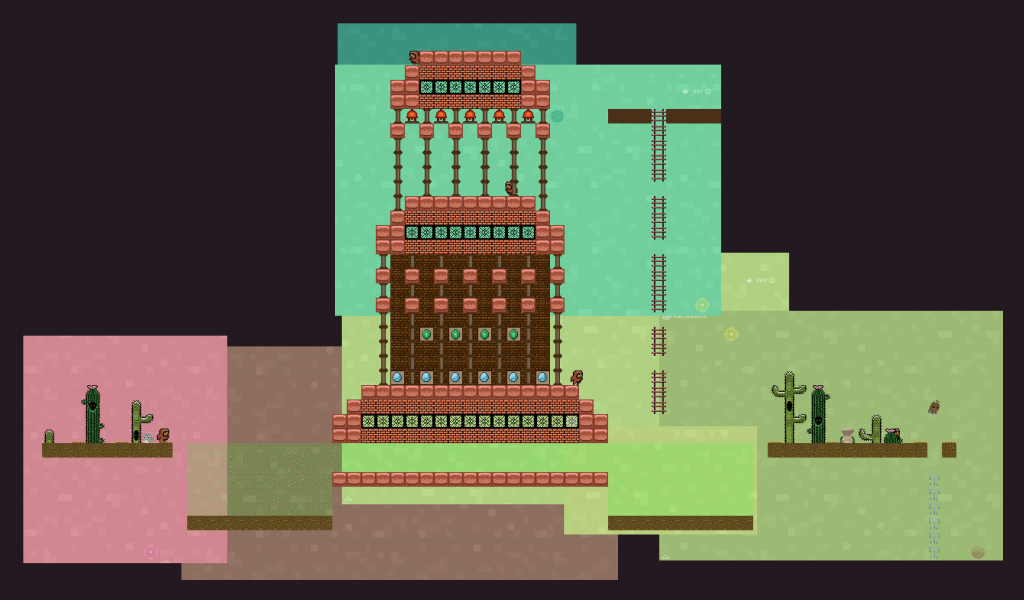
I also built this temple, but in hindsight, the color of the bricks I used makes the whole thing look like something else; something less, uh, temple-y.

The magic wind from the cabin will actually bring you here; you pop out of the gap on the right, next to the cacti.


I don't actually get to play Manyland that often; I only play it at home, and it depends on how I'm feeling. But it is lots of fun, and as the game is still in its early stages, the developers are quite reachable for help, feedback, and bug reports. If any of you get to play, my username is kalsangikid.

24 November 2012

Letter No. 8

I joined Glitch, and it was love at first play. Now, I have just a little over two weeks left to have my fill of milking butterflies, cooking Awesome Stew, and exploring the magical world of Ur, because the best MMOG I've ever played is about to close.

I had just volunteered to organize an in-game community event when the news broke, and the forums went up in a collective wail as the players realized, Our world is actually ending.

I'd recently watched "Wreck-It Ralph" twice and felt a jolt in my gut; the fantastic predicament for the glitch in that movie was now very real for us; who knew what would happen to us as the plug was pulled on our own little universe?

The event I was to run was immediately cancelled, to allow participants to say their goodbyes, draw up their bucket lists, and spend their last days as glitchen however they pleased. There was a virtual filing out of the room.

Left alone, it wasn't hard for me to see the precious value of the time I had left. I had only played for about two months. I had just started piecing together the in-game clues to the real story behind the 11 giants. I had only just reached that level of skill and self-sufficiency in the game where I could really do what I wanted. My ultimate project, to build a travelers' rest with cheap food, trip tickets, and free reading material, had just begun to gain momentum.

Now, I had to decide whether to go on with glitchy life as usual, or hang the plans, close my doors, and take that metaphorical cruise around the world.

My brother, perhaps in going about his own end-of-the-world business, generously finished building for me. Partly so his efforts wouldn't go to waste, and partly to avoid disappointing whatever visitors I'd get before the end, I put up the sign, got some furniture, decorated the place, and stocked the vending boxes with whatever I could make out of the ingredients I had at the time. Then, I splurged on some new clothes and set off for both unexplored and beloved corners of Ur.

I trekked through every last one of the savanna-like Ancestral Lands, bounced on the fungi trampolines of Haoma and Kloro, went salmon fishing in Jal, scaled the last rocky ledges of Ormonos, bid goodbye to the bureaucrocs at the Department of Administrative Affairs in the Ministry of Departments, hung out with the bartender of Hell, got lost in a bunch of abandoned basements, attended a party on the moon, and even looked down at Ur from orbit.

The asteroids had become shrines to the game; they were covered with heartfelt letters, favorite foods, keys, toys, old tools, and other everyday-items-turned-mementoes of our glitchy existence. I left my own letter and a bowl of stew before heading out again.

In the ancestral lands. Trees in Ur talk after you interact with them. The paper trees speak in haiku.

The frozen lake in Nottis, Ur's snowy northern region.

Somewhere in Ormonos.

"A mixologist of the underworld, no one knows the true story of Hell's Bartender, but assume he was either really good at pouring bad drinks, or really bad at pouring good drinks in a previous life."The Glitch Encyclopedia

Partying with Mikko on the moon.

The asteroids.

When I was done travelling, I came home to my own firebog treehouse in the highlands and saw that my time wasn't up just yet. I restlessly wandered some more, casting about for something fulfilling to do in the weeks I had left, and finally thought again of my travelers' rest. There was no way I could end the game without at least attempting to make my humble pit stop as wonderful as I'd imagined. So, I bookmarked some good poems, came up with a menu of my favorite dishes in the game, and found myself creating spreadsheets on the ingredients I needed.

I decided to cook 61 of everything; I wanted a two-digit prime number because the game creators liked prime numbers, and the digits add up to 7, my own favorite (also prime) number. I set to work, gathering, growing, harvesting, and buying as much as I can.

That's how I spend most of my free time now. I know it sounds like a waste of time, but that's how attached I've become to Glitch in the short time I've played it. Even if I never cook 61 of all 12 dishes I've chosen and spend the rest of my time in the game gathering 4,758 cherries, even if I have to give up because the countdown to the end of the world is about to begin, I'll at least be able to say that I spent my last days doing what it took to reach my little dream.

I'll admit, it's more than I can say about my life offline. Yet that's also a big part of why I love Glitch. The spirit of the game inspires me even when I'm not playing, and its impending end is as much a good thing as a sad one. I know that I can't depend solely on a fantasy world to make me feel powerful, creative, and generous. I know that my actual life should have its own projects. As I work through the last days of Ur, I remind myself that when it's all over, the next quest will be to find something I can actually create, work toward, and be happy about.

The timing is pretty good. The new year is coming. I'll head back to Chinese classes then, and I want to learn about other things, too: the stock market, drawing, flexagons, Asian literature, Asian history, and so on. There won't be any fungi trampolines, but there will be travelling; I want Cris to see Kalsangi, and I hope to take more trips with him and with my family.

And though it isn't over yet, it's been a truly lovely year. Even with the weird blue funk I've been in for the past couple of months, I am happier than I thought I'd be now, and I am in a very good place. I'm excited about what's next.

But first, 4,758 cherries, 488 bottles of butterfly milk, 1,830 allspice corns, 1,281 bubbles, 610 tomatoes, ....

04 October 2012

Letter No. 4

I’ve just found a big bowl of salad at the top of a tree.

I don’t know who put it there. It might have been a bug. It might have been a fellow player. It might have been a gamemaker. It might have been a gift from any of the 11 Giants who are said to have imagined this world. (It’s probably Pot, Giant of Cheffery).

But whoever or wherever it came from, this random-seeming meal from the sky has enlightened me on my new purpose in life. Becoming a master furniture craftsman can wait. I’m going to dedicate myself to cooking and leaving food in weird places, too.

Maybe I’ll start calling myself a food fairy. A food-lanthropist. No, a benefooder! Yes, that’s it.

And I’ll follow in the footsteps of my own benefooder, leaving delicious meals for tired, hungry travellers in my wake. And maybe that will inspire others to do the same, who will fill other bellies and inspire those bellies’ owners to do the same.

And maybe at some point in my journey across the magnificent world of Ur, I will cross paths with the first great being who left me this salad, and he/she/it will tell me that I have been a good follower, spreading the joy of excellent cooking throughout the land, from the snow-capped mountains of Andra to the darkest corners of Illmenskie Deeps.

And maybe he/she/it will finally tell me what makes secret sauce so secret, even if its ingredients make it sound a lot like regular mayonnaise.

Or maybe he/she/it will reply to this post, “You idiot. I dropped the salad there because my pack was full.”

And why not? I’ve only been playing Glitch for about a week, but this kind of far-fetched fantasy seems to be just what this game encourages.

[You can skip this part and scroll down to the next heading. The following is just rambling geekery.]

Let me backtrack a bit, before you think I’ve been munching on mushrooms. (I’ve yet to eat a mushroom in the game, so I don’t know what that does. I’ve eaten a purple flower, though, and the experience was very, very interesting.)

I don’t consider myself a hardcore gamer, mostly because our only console growing up was Family Computer, and my personal computer has been a Linux netbook since 2008. If I really wanted the MMOG experience or even just local network games like DoTA, I’d have to make the commitment of going to an Internet cafe, paying for access, training, paying, and training some more, for days or weeks  before I’d reach a certain satisfying level of progress. It just seems too expensive and time-consuming for something I’ll probably get bored with a month or so down the line, anyway.

Because somehow, I’ve always missed the thing in these games that draws players in for really serious, notebook-filled-with-formulas, level-99999-with-all-the-upgrades play. I do love computer games, and I love playing with friends, but none of the MMOGs I’ve tried so far have been able to hold my interest.

I think it’s because most of these games are essentially war games, and being a warrior of some sort is all you really get to be. Even if some games let you choose a non-martial class, like a healer or a wizard, you’re mostly other players’ sidekick; you don’t really get to fulfill your purpose if you aren’t there at the battleground for the warriors’ benefit.

And no matter how beautiful the graphics, how masterful the world-building, or how rich the story, in the end, you’re still in that story to fight. You never really get to be the bartender, the city tour guide, the blacksmith, the chef, the storekeeper, the farmer, the brewer, the scientist, the local doctor, the monk — all these roles and more are filled by game robots, when I’m sure there are lots of human players like me who would love to take over, instead of heading out into the dessert to kill 200 squishy pink things for a handful of coins.

On the other hand, non-war MMO games these days are mostly designed for the gamemakers’ benefit. They let you level up fast, and then they ask for your wallet and your phone book. Facebook-based games in particular tend to tie your progress to the amount of real money you’re willing to pay and to the number of other people you can coerce into playing with you. After a while, these games become a drag, and you become a drag on your friends, who would like you to stop asking them for imaginary nails.

So, when I read this boingboing post a few days ago, I was intrigued. The computer requirements were netbook-friendly, and Glitch’s about page, quoted below, sounded like everything I hadn’t realized I wanted in online gaming, plus a touch of weirdness:

Glitch is a web-based massively-multiplayer game which takes place inside the minds of eleven peculiarly imaginative Giants. You choose how to grow and shape the world: building and developing, learning new skills, collaborating or competing with everyone else in one enormous, ever-changing, persistent world.
What's different? For starters, it's all one big world. Which means everyone is playing the same game and anyone's actions have the ability to affect every other player in the game. It also involves very little war, moats, spaceships, wizards, mafiosos, or people with implausibly large muscles. Also: we have egg plants. Egg plants make it very different.

I had to see it for myself. I requested an invite to the recently relaunched game, and as soon as it let me in, I was hooked.

[If you skipped all that stuff, you can start reading again.]

As much as I’d like to describe Glitch by comparing it with other games (I sucked my own brother in by telling him it was an MMO version of one of his favorites), I’m afraid this might just make people dismiss it without giving it a try — and I really, really, really want other people to give it a try.

It’s kind of like having read the most amazing book and wanting to shove said book in all your friends’ faces, so you don’t have to feel the way you feel about it alone. Your friends ask you, “Well, what’s it about, what’s it like?”, and all you can do is grunt exasperatedly and say, “Just read it! Read it already! And then tell me what you thought about it!”

That’s kind of the way I’d like to go about sharing Glitch. Forget everything I just said about the MMO gaming experience. Just think of the way you felt when you read or listened to a favorite story as a child.

Think of the thrill you felt, imagining yourself exploring the world of those stories — how spooked you got as you followed some mysterious instinct deeper into the forest, swamp, or abandoned house, and how wonderful it was when you saw the reward at the end.

Think of your old make-believe games where jumping over a hole in the ground was really jumping across a canyon, and how seriously you took your play.

Think of your half-remembered dreams, of conversations where you can’t remember the participants’ faces or what they actually said, yet you find yourself puzzling over what they meant when you wake.

Think of the wittiest, gentlest, wisest characters who’ve made you laugh, made you think, and made you want to improve yourself a little bit — or a lot.

Then tell yourself that Glitch is that kind of story or dream. It’s still in progress, and you get to be one of its people. And if you want, you can be a guru, builder, gardener, wanderer,  healer, businessman, bureaucrat, or benefooder — and no one’s going to force you to be or do anything you don’t want, because the only character class is “character.”

The only way I can conclude now is to say, play. Just play it, play it already, and then tell me what you thought about it.

--
If all that’s way too vague for you, I suggest you just visit this page. And if you want a more traditional what-this-game-can-do review, this is a pretty good one.

30 November 2010

A Long, Full Life

This is going to sound geeky, but my Sim died the other day, and it depressed me a little bit. Why? Well, by a mix of Sim and human standards, her life had not been as fulfilling as it could have been.

A few months ago, I installed the Sims 2 on Martin's old computer. No one was using it, and I wanted something to do while he did weekend work but wanted me around.

I immediately started work on a Legacy family but also created a Sim self and Sim Martin to be their neighbors. I would alternate between the families to give myself a break from the problems of one ridiculous household by wrangling another.

Anyway, because Sim me and Sim Martin were created at the same time, I assumed that they would die of old age at the same time. But, as in real life, that was a silly expectation.

For those who are not familiar with the game, Sims have aspiration levels of red, green, gold, and platinum. You rack up aspiration points by completing your Sims' "wants," which in turn depend on their age and aspiration type: Grow Up for toddlers and children, and Family, Romance, Wealth, Popularity, and Knowledge for teens, adults, and elders. The number of points they gain throughout their lives determines how happy they are and how long they live.

If you manage to get your Sim to elder-hood without them starving, drowning, burning, getting electrocuted, or encountering any of the other unnatural causes of death, you then get to see them die of old age. They suddenly stop whatever they're doing, stare into space, and see the Grim Reaper, who gently escorts them out of the game. Meanwhile, any family and friends in the area also stop what they're doing, run to the area, and sob miserably over the Sim's passing.

Now, if your Sim happens to die while carrying a platinum aspiration level, the Grim Reaper arrives escorted by hula dancers and hands your Sim an umbrella drink and a suitcase. Your Sim then sets forth into the afterlife with a smile on his or her face, and a platinum grave marker with the symbol of their aspiration appears in their stead. It's a sign of a long, full life that will stand as long as your Sim's descendants continue the game, or unless you delete it.

So, what happened to my Sims? Well, Sim Martin's wants generally involved making friends and being creative. By the time he was an elder, he was a bestselling author and a retired celebrity chef. Sim Kat's wants centered around her family's well-being, but I also got her a career in science to increase the household income. By the time she was an elder, she was a retired mad scientist and had two well-raised kids and one grandkid.

Before long, I saw that death would catch up with my Sims soon enough. To make sure that they would go out in a happy, platinum state, I timed the youngest son's wedding for one day before their deaths. Both Sim Martin and Sim Kat wanted him to get married, and completing the want was worth 8000 points, a number sure to max out their aspiration levels.

On the day of Grim's arrival, all Sim Martin and Sim Kat wanted to do was hang out with their family and each other. I thought it was a sweet way to end it all. Also, while interactions with other Sims are worth only 500 points, nice Sims generally want lots of contact with each other throughout the day, which makes it easy to maintain a platinum state.

Finally, the hour arrived, and the Grim Reaper came--but for Sim Martin alone. My happiness at seeing him accept his umbrella drink quickly dissipated at the sight of Sim Kat left behind, bawling her eyes out over a platinum grave marker. To make matters worse, I had no idea how much longer she would have to live.

I hoped to keep Sim Kat happy until her turn came. The next day, she wanted to hang out with her sons and grandchild, so that kept her in platinum for a while. But the day passed, and she still didn't die.

The next day, she wanted to find love again. Specifically, she wanted to hang out with her best friend from work, a fellow retired scientist whose alien spawn was now Sim Kat's daughter-in-law, and see if they could take things to another level.

This is not a scandal to Sims, for whom a day can be considered equivalent to a human year (and alien abduction and insemination, though it produces green kids with humongous eyes and great cheekbones, is completely accepted). I should also have expected Sim Kat to want to find love because wants cycle.

For instance, after a Romance Sim has attracted, kissed, and seduced another Sim, they'll want to do it over again with someone new. After a Family Sim has had a baby and taught it to walk, talk, and go potty, they'll want to have another child.

Unfortunately for Sim Kat, Family Sims also like being married. So if a Sim spouse leaves or dies, their wants will naturally reroll to finding love again.

I could have ensured my Sim's happiness by inviting her best friend, who was single anyway, over for lunch. However, my human loyalty to both Sim and human Martin refused to give in.

I had hoped that Sim Kat would live at least one more day, either to fulfill her other big want, to have another grandchild (one of the daughters-in-law was due to give birth soon), or for the small wants to reroll to something simple, like talking to her eldest son or making pancakes for everybody. After all, I had managed to keep Sim Martin happy by completing enough simple wants, so he died in platinum even though his last manuscript was still unfinished.

But Grimmie decided to arrive for Sim Kat just when her aspiration meter fell back to gold. Although my Sim wasn't disappointed (gold-level Sims still get the hula sendoff, but sans special tombstone), I was.

Putting myself in the game was definitely wish fulfillment on my part. I wanted the pretty home, the interesting career, and the husband, kids, and grandkids, and I made sure that I got them. The fact that I had outlived Sim Martin meant that I'd had more of my desires fulfilled during my lifetime than he. By both human and game standards, I didn't really need anything more.

But because of her job and because her wants focused on her family, Sim Kat didn't get to fulfill any of human Kat's other fantasies, which involve doing something big and creative. Sim Kat didn't finish her novel or paint a masterpiece because she was too busy studying things for science, cooking dinner, and making sure her kids did their homework. Sim Kat didn't want to write or paint in the first place, but like I said, it would have been wish fulfillment for me.

The less petty reason for my disappointment is, even though Sim Kat died surrounded by her family, and with all the memories of her achievements, she was still lonely. Though she died pretty happy by Sim standards, she was not as happy as she could have been by either Sim or my standards, due to both the game's design and my own choices.

So my Sim's death bothers me because I can't help seeing it as a miniature of my own existence. It's not just some game. I am afraid that my own decisions and last wishes mean that I die unsatisfied. I am afraid that even if I do find fulfillment, I will always seek more of it. I am afraid that I can't or won't let myself be content with what would otherwise be a really good life.

15 June 2010

Leveling Up

I had breakfast with Martin in the Ateneo faculty lounge this morning. I'd eaten there before, during the summer, when there were but a handful of students around. Martin wasn't teaching, but he would come in for admin meetings at the Fine Arts Department.

Today was the first day of school, so there were more than just a handful of students there, even if it was so early in the morning. We even spotted a few moms accompanying their freshman sons. (Hay.)

With a near-empty campus in the summertime, it's easy to feel proud of yourself upon returning to your alma mater, but after this morning, I can no longer remember why. "Suddenly, college life feels like a blur," I said aloud. Suddenly, when I look back on the four years spent racing from classroom to classroom, staying up late in my dorm room to cram and commiserate with roommates during finals week, being the token little sister type in our block's guy barkada and then spending all my free time in the pub(lications) room, I hear a VROOMSH sound in my head. The pride I feel over "it all" being behind me has been replaced by shock at just how far behind me "it" is. That was college? Oh. Well. Huh.

Maybe that's why adults keep mentioning a certain "real world" whenever they talk to students. Maybe it's not so much that their disbelief in students' ability to cope with new responsibilities as it is their disbelief that they ever had old ones, once upon a time. It's not really a "real world;" it's a new world, one that bears some resemblance to the old ones (ever hear this song?) but has higher expectations and direr consequences.

Now that I think about it, life so far has been like those MMORPGs I used to play. At the start, you get a puny weapon and can only kill puny monsters. Then, as you gain more experience points, you level up. You get to wield bigger weapons and kill bigger monsters--but in the end, that's all it is: killing monsters, just at different levels.

Then the game asks you to specialize, so you focus your efforts on developing a certain aspect of your character (I have a high level of DEX, so I'd make a great archer, but now that I think about it, I'd rather be a magician). You think about stuff to invest in for your character's survival (I can afford this really cool staff, but I really should save up for a better shield).

And then, some quest or errand sends high-level you back to your old training grounds. You find that the map wasn't as big as you thought, the terrain was not as difficult, and the claws of your most feared monsters now give just a slight tickle. You may feel pride, and feel like laughing at the beginners just entering the field. But after a while, it's not even funny, and instead, you feel some kind of amnesia. "Did I really come from this place? Was I really like them? When? How?"

I don't claim to be a high-level player, whether in real life or in RPGs. I usually gave up on a game once I got the basics down and reached phase two or three of a career; the tedious quests you had to complete to become an awesome, highly specialized top-level player just didn't seem worth it to me--unlike my brother, who kept notes and bought guides and did all these calculations and stuff to make sure he made all the right moves and eventually be king of the game. Our approaches to gaming are actually not that far off from our approaches to life in general. (I wonder if it means anything that I preferred simulations to RPGs. Hmm.)

But at the very least, I can reasonably say to the people about to cross the bridges I've crossed that the fearsomeness of those ravines is all in their heads. You get over things. You move on. You even forget.

Of course I'm a little sad. I miss when things were big deals. I miss when cutting class meant a missed quiz, not a smaller payslip. I miss having concrete, if somewhat superficial goals. I miss living under the illusion that I really knew what I wanted.

But I'm here now. And when I think about it, life is good. I live independently. I have a decent job. I have my family and my friends. I have Martin. This is, more or less, the life I want for myself at this point. Even if I'm half stumbling through life out of school, there are actually more opportunities for me to be happy now than there ever were before.

And the best part is, the fun's not about to be cut short by graduation--at least, not for maybe eighty more years.

Life is good.